Math Symbols in English for Kids
A core set of signs covers most early equations: + (plus), − (minus), × (times), ÷ (divided by), and = (equals). Math Symbols in English for Kids: Words and Activities links each mark to spoken English and home practice. Point to a mark, name it, read an equation, then explain it. For 3 + 2 = 5, a child says, “Three plus two equals five,” and identifies addition.
Core Words and Phrases
Math Symbols in English for Kids: Words and Activities begins with the following basic signs: +, −, ×, ÷, and =. Teach “plus,” “minus,” “times,” “divided by,” and “equals.” Then model “add,” “subtract,” and “multiply.”
A symbol may have multiple correct readings. For example, 3 × 4 can be “three times four” or “three multiplied by four.” Children should recognise both but initially need to say only one confidently.
Keep each sign visible while speaking. Point to the numbers from left to right, then the result. For comparisons, name both numbers before reading the relationship.
Start with spoken accuracy
Let your child pause before phrases such as “greater than or equal to.” Accurate words matter more than speed.
Examples in Everyday Contexts
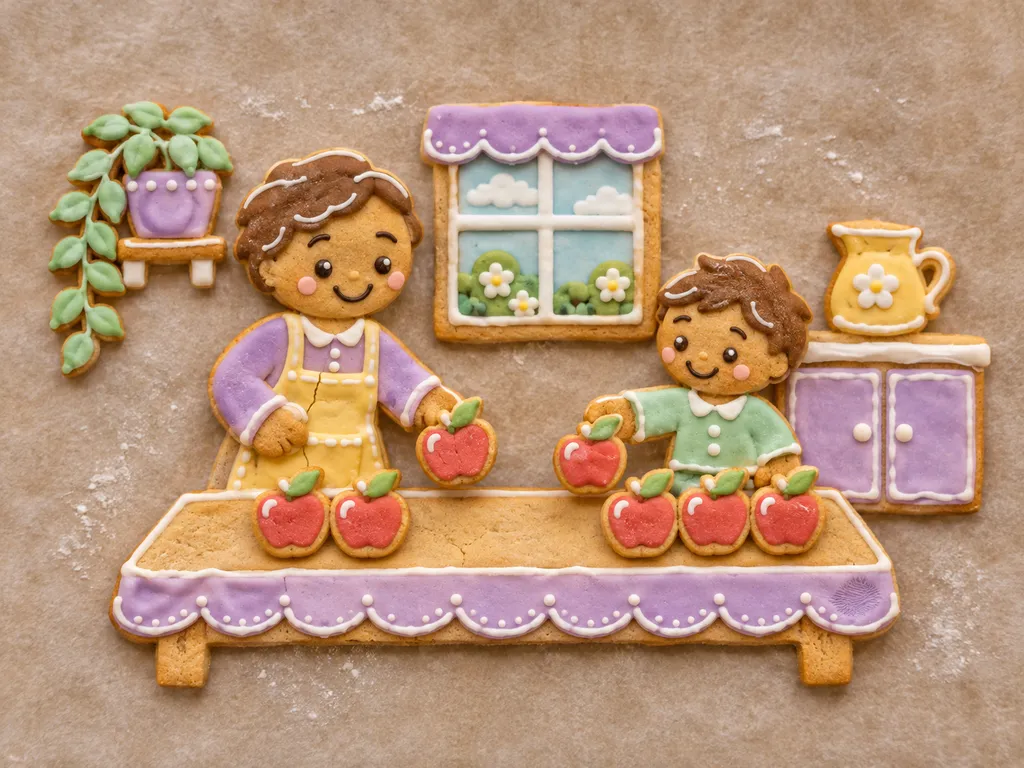
Math Symbols in English for Kids: Words and Activities turns equations into spoken messages. Ask, “You have four grapes and get two more. Which sign do we need?” Your child chooses + and says, “Four plus two makes six.”
Place seven buttons beside 5 blocks. Ask which group has more, add the sign, and say, “Seven is greater than five.” Swap the groups and ask your child to read the new statement.
Older children can correct false equations: “Ten divided by two does not make six. The correct result is 5.” This practises the symbol, a full sentence, and the reason. Accept correct ideas in basic English before requesting detail.
Read, Choose, Explain
Write 6 __ 3 = 9. Ask your child to choose +, −, ×, or ÷, read the completed equation aloud, and explain the choice in one sentence.
Activities for Different Ages
For children new to symbols, use toy animals, counters, fruit, or fingers. Make two groups, move one item, and place a large paper symbol between them. Practise +, −, and = before comparisons.
For equation building, prepare separate cards for numbers, symbols, and phrases. Your child builds an equation, reads it, and matches each sign to “plus,” “minus,” “times,” or “divided by.” Turn over one card and ask what is missing.
For advanced notation, include decimals, fractions, percentages, and inequalities. Request two readings where possible: “one half” and “one over two,” or “three times eight” and “three multiplied by eight.” Match the level to readiness.
Quick Practice That Fits into Family Routines
Use Math Symbols in English for Kids: Words and Activities in brief sessions lasting several minutes. Review three known symbols, add one phrase, and finish with a solvable equation. The routine connects English vocabulary with mathematical meaning.
Practice checklist
- Choose three symbol cards.
- Ask your child to name each sign.
- Build one correct equation.
- Read the whole equation aloud.
- Change one number or sign.
- Ask your child to explain the change.
Try a symbol hunt in homework, a recipe, a calendar, or a receipt. Your child points to a sign, names it, and explains its job. Exclude private account details and payment information.
In one-to-one sessions, LearnLink tutors can model a phrase, wait for a full response, and adjust the language without solving the calculation. At home, follow this pattern: show, ask, wait, then supply one word if needed.
Common Mistakes and Useful Corrections
Children may call + “more than” because addition increases quantity. Model the exact pair: + is “plus,” while > is “greater than.” Place the signs side by side and use each in a full statement.
Two ideas to correct
Myth: The = sign means “write the answer next.”
Fact: The = sign shows that both sides have the same value.
Myth: A child who solves the calculation already knows the English.
Fact: Solving and naming the symbols are separate skills, so both need practice.
Another mix-up concerns −. In “nine minus four,” it is a minus sign. In “negative four,” it marks a number below zero. Say the full expression so your child hears the intended meaning.
Comparison signs may confuse children when read from the opposite direction. Skip picture or memory tricks and read the numbers first. Then check the sentence: “Two is less than eight,” or “Eight is greater than two.”
- Point to a selection of math symbols and ask your child to name each aloud.
- Match plus, minus, times, and divided by with one written equation each.
- Read three equations aloud, then correct symbol words together using the chart.
- Sort six flashcards into operation symbols and comparison symbols before checking answers.
- Write two corrected examples in a notebook and explain every change aloud.
When a word has several meanings or pronunciations, Cambridge Dictionary is a useful check before turning it into child-friendly examples.
Frequently Asked Questions
Which Math Symbols Should a Young Child Learn First?
Begin with +, −, and = because they support short equations using countable objects. Add > and < when your child can compare groups. Introduce multiplication and division when they appear in schoolwork. Teach few signs at once through complete spoken examples.
Should My Child Say “Math” or “Maths” in English?
Both forms are standard. “Math” appears mainly in American English; “maths” appears mainly in British English and other varieties. Symbol names remain unchanged. Your child can follow the school’s form while understanding both words in books, videos, and online lessons.
What If My Child Can Calculate but Cannot Name the Symbols in English?
Treat this as a language gap, not a calculation problem. Show one symbol, give its English name, and ask your child to include it in a full equation. If needed, accept an explanation in another language first, then build the English sentence together.
How Often Should We Practise Math Symbols in English?
Use Math Symbols in English for Kids: Words and Activities two or three times each week. Follow this three-step routine:
- Review three familiar signs.
- Add one new word or phrase.
- Finish after one correctly read equation.
Repeat difficult phrases during the next session. Keep practice near five minutes and prioritise accurate speech over speed.
Start your child's English journey today — book a trial lesson with LearnLink.
Stay updated on our latest tips and resources by following us on Instagram LearnLink.